

As geopolitical tensions continue to reshape global energy markets, the United States is reportedly planning to impose a staggering 500% tariff on Russian oil products sold through intermediary nations. This aggressive move, aimed at tightening sanctions against Moscow, is poised to have far-reaching consequences—not just for Russia, but for major importers of discounted Russian crude, including India.
With New Delhi having significantly increased its oil purchases from Russia since the onset of the Ukraine war, the question now looms: Will India be forced to recalibrate its energy strategy under U.S. pressure, or risk a diplomatic showdown? This article explores the motives behind Washington’s latest tariff threat, its potential global ripple effects, and why India may find itself uncomfortably caught in the middle. Export Genius explains with crucial information.


The United States is planning to tax countries that continue to trade with Russia even after Moscow’s full-scale invasion of Ukraine three years ago. According to a report, President Donald Trump has extended support to a proposed bill calling for 500 per cent tariffs on goods from countries continuing to trade with Russia, including India and China.
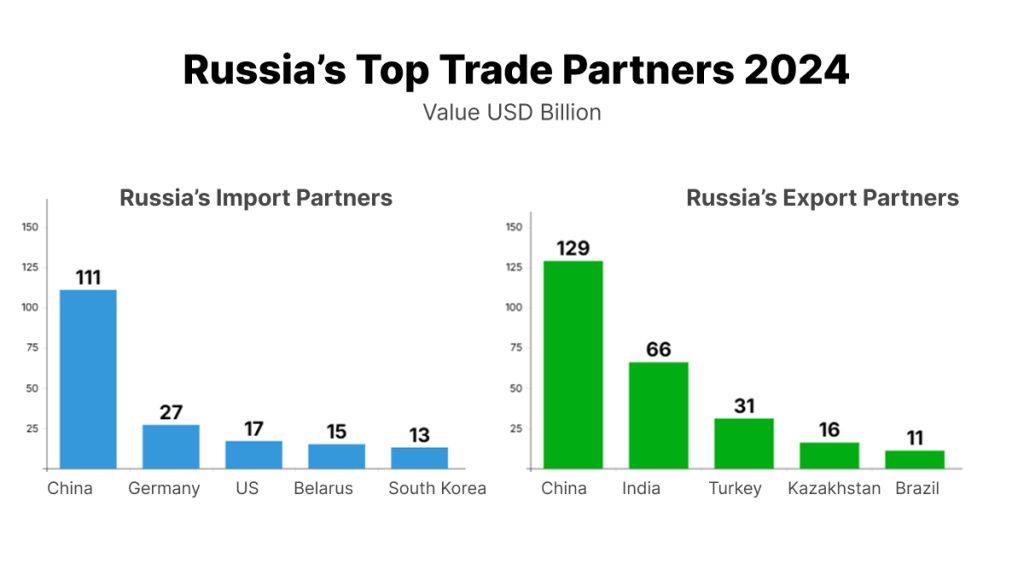
| Russia’s Import Partners | Value USD Billion | Russia’s Export Partners | Value USD Billion |
| China | 111 | China | 129 |
| Germany | 27 | India | 66 |
| United States | 17 | Turkey | 31 |
| Belarus | 15 | Kazakhstan | 16 |
| South Korea | 13 | Brazil | 11 |
What’s The Bill About
The sanctions bill, which currently has 84 co-sponsors, aims to pressure countries like India and China into buying Russian oil and other goods to weaken Moscow’s war economy and push Russian President Vladimir Putin to the negotiating table on Ukraine and give Trump “a tool” to bring that about.
So, what does this bill do? If you’re buying products from Russia and you’re not helping Ukraine, then there’s a 500 per cent tariff on your products coming into the United States. India and China buy 70 per cent of Putin’s oil.
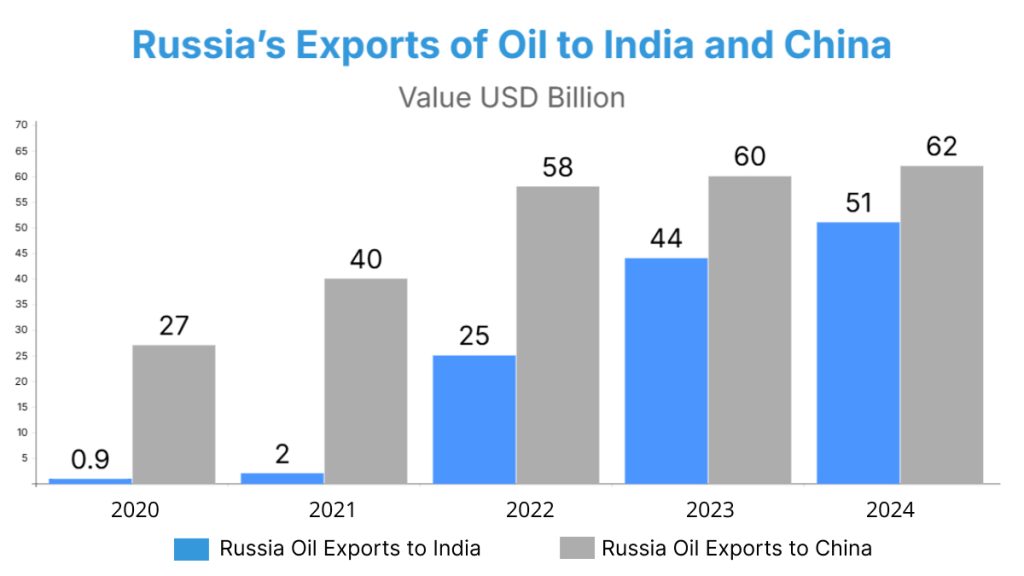
| Year | Russia Oil Exports to India | Russia Oil Exports to China |
| 2020 | 0.9 | 27 |
| 2021 | 2 | 40 |
| 2022 | 25 | 58 |
| 2023 | 44 | 60 |
| 2024 | 51 | 62 |
****Value USD Billion
When Will The Bill Be Tabled
The legislation, initially proposed in March, is expected to be moved in August. It is part of America’s growing efforts to tighten the economic noose around Russia as Trump struggles to drag Putin to the negotiation table. In contrast, the war in Ukraine drags on.
The tabling of the bill in the Senate was delayed after the White House signalled opposition to expanding sanctions, while Trump was trying to reset ties with the Russian President. However, the administration seems ready to support the sanctions.
How The Bill Can Affect India
Amid Western sanctions, countries like India and China have continued buying discounted Russian oil, making them targets of the proposed legislation.
India, the world’s third-largest oil-importing and consuming nation, bought from abroad around 5.1 million barrels of crude oil, which is converted into fuels like petrol and diesel in refineries.
India, which has traditionally sourced its oil from the Middle East, began importing a large volume of oil from Russia soon after the invasion of Ukraine in February 2022. This was primarily because Russian oil was available at a significant discount to other international benchmarks due to Western sanctions and some European countries shunning purchases.
This led to India’s imports of Russian oil seeing a dramatic rise, growing from less than 1 per cent of its total crude oil imports to a staggering 40-44 per cent in a short period. In June, India ramped up purchases of Russian oil, importing more than the combined volumes from Middle Eastern suppliers such as Saudi Arabia and Iraq, amid market volatility triggered by Israel’s dramatic attack on Iran.
Indian refiners were proposed to import 2-2.2 million barrels per day of Russian crude oil in June, the highest in the last two years. India’s oil imports from Russia were 1.96 million barrels per day (bpd) in May.
If the US implements the proposed bill, it could lead to staggering 500 per cent tariffs on Indian products imported to America. However, India is in the process of signing a trade deal with the US, which would likely bring down US tariffs on India considerably.
The Bottom Line
The U.S. move to impose 500% tariffs on Russian oil buyers is not just an economic measure—it’s a calculated geopolitical signal. For India, a country that has leveraged discounted Russian crude to stabilize domestic energy prices, the implications are serious. Navigating between Washington’s strategic pressure and Moscow’s energy partnership will require a delicate diplomatic balance. Whether India chooses to adapt, resist, or seek middle ground, its decisions in the coming months could redefine its role in the evolving global energy and geopolitical order. One thing is clear: India is no longer just a bystander in the oil war—it’s now in the line of fire.
Author: Sachin Bharadwaj